A Quiet Winter Hour for Watching Garden Birds
A quiet winter hour watching garden birds reveals how they use feeders, cover, and garden routes, with a simple routine that keeps disturbance low.
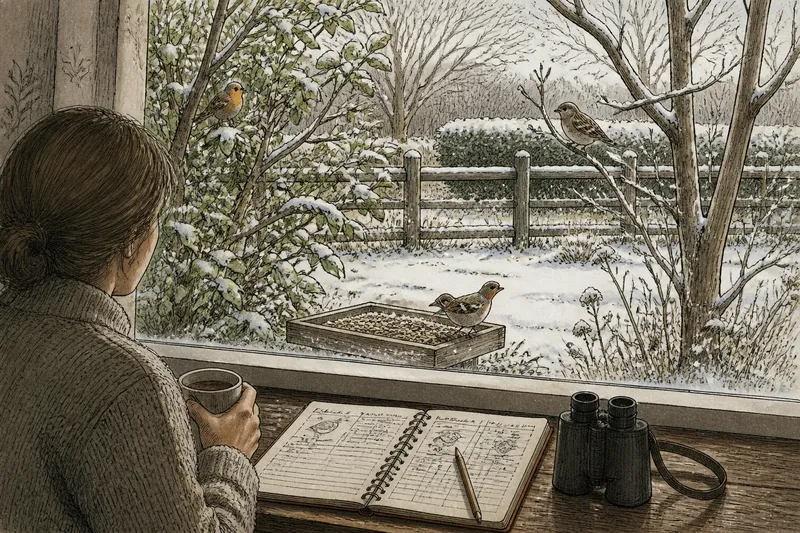
How can you watch garden birds in winter without making them wary or turning a feeder visit into a performance? A quiet winter hour watching garden birds starts with a sheltered seat and a view that includes both food and cover. The birds’ changing use of those places—not a perfect species list—gives the hour its shape.
Choose a view that includes cover and open ground
Pick somewhere you can remain still and comfortable: a kitchen window, porch, or sheltered place behind an existing wall. Sit back from the glass, and avoid standing beside a narrow route birds use to reach food or shelter. Outdoors, use cover already present rather than moving branches or placing a screen where birds pass.
Include more than the feeder in your view. A tray beside a shrub, for instance, shows both the exposed feeding spot and the place a bird can retreat to. A fence rail or bare branch may also reveal how birds use the space between visits.
Keep the viewing area small enough to follow without turning your head constantly. If glare obscures it, adjust your seat or draw a curtain behind you. Binoculars are optional; for a compact garden view, unaided sight may be enough to follow routes and pauses.
Let the garden keep its usual arrangement
Before settling, put a notebook and pencil within reach. Add a warm drink or binoculars if useful, then silence notifications. Keep a camera out of the way unless you can use it without moving toward the window or disturbing the birds.
Do not move a feeder, add food, or trim cover to improve the view during the session. If you already maintain a feeder, observe its usual arrangement. Keep food and water clean, following the feeder maker’s directions and relevant local wildlife guidance.
Sit down, arrange your notes, and give the scene time to settle. Rest your gaze on the whole area rather than staring at one perch. Birds may continue their usual activity or wait until things are quiet; either response can help you understand how they use the garden.
Follow the garden’s changing use of space
Start with a few plain details: the time of day, the light, whether it is windy or still, and whether the ground looks wet, dry, or frozen. These are context, not an explanation. A single session cannot tell you what caused every change in activity.
Watch how birds use the space at different moments. Early in the hour, note which parts of the garden they enter from and whether they cross open ground or travel along cover. Later, pay attention to where they feed, pause, and wait. During quieter stretches, listen for calls and watch likely exit routes without searching through every branch.
Imagine you sit indoors with a view of a feeder beside a dense shrub. In this invented situation, a small bird arrives from the hedge, takes food, and returns to cover. Later, a second bird waits on a nearby branch before approaching. Your notes could show that the feeder and branch serve different purposes on those visits, while leaving open why the birds followed that sequence.
Use notes to compare places, not just visits
A short record can capture the arrangement of a visit without turning it into a running commentary. Note the time, a species name or plain description, the place used, the action, and what happened next. If nothing is visible, leave the space blank rather than filling it with a guess.
- Entry point: Check where the bird appears; if it comes from cover, note which patch, and if it enters from open ground, record that route instead.
- Route to food: Check whether it crosses open space or follows cover; if it uses a consistent route during the session, record it, and if routes vary, describe each one without forcing a pattern.
- Feeding spot: Check whether the bird uses the feeder, ground, or another perch; if it feeds, note the place, and if it leaves without feeding, record the departure instead.
- Waiting place: Check where a bird pauses between visits; if it waits on a branch or fence, name that spot, and if no pause is visible, record the next observed action.
- Use of cover: Check where the bird retreats; if it returns to a shrub or hedge, record the cover, and if it leaves in another direction, note that route instead.
- Other birds: Check how nearby birds use the same places; if one waits, follows, or displaces another, describe the sequence, and if they remain apart, record their separate locations.
Use a familiar species name only when several visible features support it. Otherwise, write a description such as “small brown bird with a short bill.” A field guide can help later, but an uncertain name is less useful than a clear account of the bird’s size, color, movement, or route.
It is not worth leaning toward the glass, opening the door, or repeatedly reaching for binoculars to settle a fine identification. Those movements can change the scene, while a broad description still lets you compare where and how a bird used the garden.
When should you return, and what should you compare?
What time of day should I watch garden birds?
Choose a time when you can remain settled and see the chosen area clearly. For a comparison, return at a similar part of the day and record any obvious difference in light or weather rather than assuming the activity will match.
Should I watch garden birds through a window?
A window is often a useful low-disturbance viewpoint if you sit back and avoid sudden movements. Reflections may obscure details, so follow routes and places used rather than trying to identify every feature.
Do I need binoculars for garden birdwatching?
No. Binoculars can help with distant details, but they are not necessary for noticing where birds enter, feed, pause, or leave. Keep them within reach before you settle so you do not have to move repeatedly.
How can I tell if my presence is changing the birds’ behavior?
Look for a repeated change that follows your movement, such as birds stopping their approach or leaving cover when you appear. Give them more distance or end the session rather than insisting on a closer view.
Leave the garden ready for its next visitors
When the hour ends, leave the garden’s arrangement unchanged. On another day, compare which places birds used, how they moved between them, and whether the same parts of the garden remained quiet. A quiet winter hour watching garden birds can reveal a familiar route, a new pause point, or simply that the feeder is only one small part of the scene.